Is it correct to call Seollal "Chinese New Year"? As a local insider in Seoul, I dive deep into the cultural sovereignty of Korea's biggest holiday. This is not just a calendar event; it's a battle for cultural identity and historical accuracy.
Section 1-1: Why Seollal is the Essence of Korean Identity (And Why "Chinese New Year" is Inaccurate)
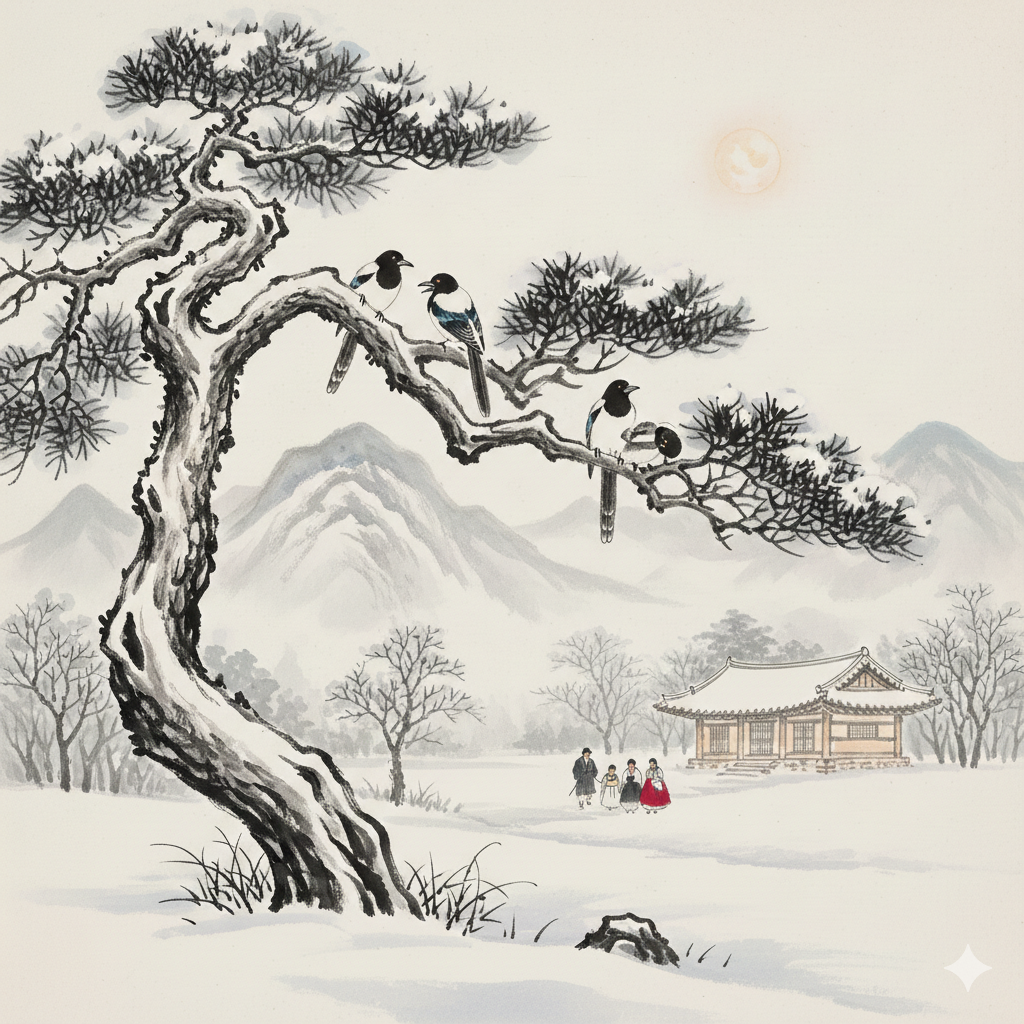
By Michael Choi – Local Insider, Seoul
As the cold winter winds of January and February sweep through the skyscrapers of Gangnam and the ancient alleys of Bukchon Hanok Village, a peculiar energy begins to settle over South Korea. It is the energy of Seollal (설날). For a visitor, it might look like just another public holiday, but for those of us living here, Seollal is the very fabric of our social and spiritual identity. However, in recent years, a global debate has overshadowed our soup bowls and family gatherings: The naming controversy.
Many in the West still default to the term "Chinese New Year." While this might seem like a harmless shorthand, to Koreans—and indeed to Vietnamese, Mongolians, and others—it feels like a erasure of our unique heritage. In this extensive guide, I will break down why Seollal is a distinctly Korean phenomenon and why the global community must shift its vocabulary toward Lunar New Year or, even better, the local names themselves.
1. The Soul of Seollal: More Than a Date on a Calendar
To understand the naming debate, one must first understand what Seollal actually is. It is not merely a celebration of the moon's cycle; it is a complex tapestry of Confucian values, shamanistic roots, and modern family dynamics. Unlike the loud, pyrotechnic celebrations of the Chinese Spring Festival (Chunjie), Seollal is characterized by sobriety, reverence, and white-clad purity.
A. The Ritual of Charye (차례)
On the morning of Seollal, Korean households perform Charye. This is an ancestral rite where a meticulously arranged table of food is offered to past generations. This isn't a "Chinese custom" imported recently; it is a localized Confucian practice that has evolved over a millennium in the Korean peninsula. The arrangement of the food—following rules like "Hongdong Baekseo" (red fruits to the east, white to the west)—is uniquely Korean.
B. Tteokguk: The Culinary Mark of Age
In the West, you turn a year older on your birthday. In Korea, everyone turns a year older on Seollal morning after finishing a bowl of Tteokguk (sliced rice cake soup). The white color of the rice cakes symbolizes a clean start for the new year, and the coin-like shape represents wealth. If you haven't eaten your Tteokguk, you haven't "earned" your new age. This concept is entirely absent from the "Chinese New Year" narrative.
2. Deconstructing the "Chinese New Year" Label
Why do we resist the term "Chinese New Year" (CNY)? The argument often used by proponents of CNY is that the lunar calendar used in Korea—the Shixian calendar—originated in China. While historically true, this logic is fundamentally flawed when applied to cultural identity.
The "Gregorian" Paradox
Look at the global New Year celebrated on January 1st. It is based on the Gregorian calendar, established by Pope Gregory XIII. Does anyone call January 1st "the Italian New Year" or "the Catholic New Year"? No. We call it "New Year's Day" because the tool (the calendar) does not dictate the identity of the celebration. Similarly, using a lunar-solar calendar developed in China does not make the Korean celebration "Chinese."
Cultural Diversity in the Sinosphere
The term "Sinosphere" refers to countries influenced by Chinese culture, but this influence ended centuries ago as these nations developed their own distinct paths. Korea, Vietnam, and Tibet have been celebrating the lunar new year for over 1,500 years. To label all these diverse traditions under the umbrella of "Chinese" is a form of cultural hegemony that ignores the sovereignty of these nations' traditions.
3. Why Accuracy Matters: The Risk of Cultural Appropriation
This isn't just a linguistic pet peeve. There is a tangible risk in the term "Chinese New Year." When the world perceives the lunar new year as exclusively Chinese, it creates a vacuum where cultural appropriation can thrive. In recent years, nationalistic narratives have claimed that Korean Hanbok, Kimchi, and even Seollal customs are merely "sub-cultures" of China. By using the inclusive term Lunar New Year, we acknowledge that this is a shared regional heritage with unique national expressions.
| Feature | Korean Seollal | Chinese Chunjie |
|---|---|---|
| Primary Color | White (Purity, Clean Start) | Red (Luck, Warding off Evil) |
| Main Food | Tteokguk (Rice Cake Soup) | Jiaozi (Dumplings) or Niangao |
| Atmosphere | Quiet, Ceremonial, Family-centric | Loud, Festive, Public Parades |
| Traditional Dress | Hanbok | Qipao / Tangzhuang |
As you can see, the differences are not minor—they are foundational. Calling Seollal "Chinese New Year" is akin to calling a Thanksgiving dinner a "British Harvest Festival." While there are historical links, the modern reality is vastly different.
Section 1-2: Astronomical Independence and the Pitfalls of Orientalism
By Michael Choi – Local Insider, Seoul
Welcome back. In this section, we're going to tackle the "logic" often used by those who insist on the term Chinese New Year. Usually, they point to the calendar. But as a Seoulite who looks at both the history and the stars, I can tell you that even the moon looks different depending on where you stand. We will explore why the "source" of a calendar doesn't grant naming rights, and how Western Orientalism accidentally fueled this linguistic tug-of-war.
1. The Astronomical Reality: We Don't Always Share the Same Day
One of the strongest arguments against the blanket term "Chinese New Year" is purely scientific. While Korea and China both use a lunisolar calendar, they operate on different standard meridians. Korea follows Korea Standard Time (KST, UTC+9), while China follows China Standard Time (CST, UTC+8).
The 1-Hour Difference That Changes Everything
Because the new moon (the basis for the first day of the month) occurs at a specific astronomical moment, that moment can fall at 11:30 PM in Beijing but 12:30 AM the next day in Seoul. When this happens, Seollal and the Chinese Spring Festival fall on completely different calendar days.
2. Deconstructing Orientalism: Why the West Got It Wrong
If the science and the culture are so distinct, why did the term "Chinese New Year" become so dominant in the West? The answer lies in Orientalism—the historical tendency of Western powers to view the "East" as a monolithic, exotic entity rather than a collection of diverse sovereign nations.
The Monolith Fallacy
For centuries, the West viewed China as the "representative" of all Asian culture simply due to its massive size and early trade routes. In the minds of early Western explorers and linguists, if it involved a lunar calendar and happened in East Asia, it was "Chinese." This lazy categorization ignored the fierce independence of Korean and Vietnamese identities. It’s a classic stereotype: "Everything Asian is essentially Chinese."
The Shift Toward "Lunar New Year"
Fortunately, as the global influence of Korean culture (K-Culture) and the Vietnamese diaspora grows, the world is waking up. Modern Western institutions—from the UN to major media outlets like the BBC—have recognized that "Chinese New Year" is politically incorrect and factually narrow. The shift to Lunar New Year is a victory for inclusivity and respect for regional diversity.
3. Cultural Sovereignty: The Fight Against "Cultural Engineering"
This debate has taken a serious turn recently due to what many call "Cultural Engineering" or "Northeast Project" narratives. Some nationalistic voices attempt to claim that because Korea historically used Chinese calendar systems, all subsequent Korean traditions belong to China.
The "Tool vs. Creation" Argument
I always tell my foreign friends this: "A poet doesn't lose ownership of his poem just because he used a pen made in another country." The calendar is just the pen. The way Koreans celebrate—the Sebae, the Yutnori games, the specific ancestral rites—is the poem. It is a unique creation of the Korean people, nurtured on this peninsula for over a thousand years.
| Argument Point | "Chinese New Year" Perspective | "Lunar New Year/Seollal" Perspective |
|---|---|---|
| Origin | The calendar started in China. | The celebration evolved in Korea. |
| Inclusivity | Focuses only on one ethnic group. | Acknowledges all celebrating nations. |
| Accuracy | Incorrect when dates differ. | Scientifically accurate regardless of meridian. |
| Current Trend | Declining in global formal usage. | Increasingly used by UN, Disney, Apple, etc. |
Section 1-3: Beyond "Lunar"—The Power of Calling it 'Seollal'
By Michael Choi – Local Insider, Seoul
In the previous sections, we dismantled the myths surrounding "Chinese New Year" and looked at the astronomical independence of the Korean calendar. But as we look toward the future, a new question emerges: Is "Lunar New Year" enough? While it is inclusive and accurate, it still lacks the flavor, the soul, and the specific identity of the Korean experience. This is where the "Seollal" movement comes in.
1. The Case for Proper Nouns: Seollal as a Global Brand
Think about other global cultural exports. We don't call Sushi "Japanese Vinegared Rice," and we don't call Pizza "Italian Flatbread with Toppings." We use the original names because they carry the weight of tradition and specific craftsmanship. Why should our most important holiday be any different?
Ending the Comparison Trap
When we use terms like "Korean New Year," we are still defining ourselves in relation to a global "New Year" concept. But when we say Seollal, we are inviting the world into a specific Korean story. This linguistic shift is already happening. On English Wikipedia, the primary entry for the holiday is now officially listed as "Korean New Year," often redirected from Seollal. This is a crucial step in establishing cultural sovereignty.
2. Overcoming the "Translation Barrier"
Critics often argue that using "Seollal" is too difficult for foreigners to understand. I respectfully disagree. As the architect of this blog, I've seen the power of the "Hallyu" (Korean Wave). Global fans who understand the nuances of "Oppa," "Hyung," and "Maknae" are more than capable of learning the word Seollal.
The Problem with Descriptive Names
Consider Pajeon. If we call it a "Korean Pancake," people expect something sweet and fluffy like a breakfast pancake. When they get a savory, leek-filled dish, there’s a cognitive dissonance. The same happens when we call Seollal "Chinese New Year"—people expect red lanterns and dragons, not the elegant white beauty of Hanbok and the quiet reverence of ancestral rites.
3. How to Celebrate Respectfully in a Global World
As we conclude this deep dive, you might wonder how you can participate in this beautiful holiday without falling into the naming trap. Here is the ultimate Michael Choi guide to Seollal etiquette for our global readers:
| Action | The Respectful Way | Why It Matters |
|---|---|---|
| Greeting | "Happy Seollal" or "Happy Lunar New Year" | Recognizes the specific Korean context or the inclusive regional event. |
| Fashion | Appreciate the Hanbok | Distinguishes Korean traditional dress from the Qipao or Ao Dai. |
| Food | Try a bowl of Tteokguk | Participates in the unique "age-up" tradition of Korea. |
| Mindset | Focus on Family and Ancestors | Respects the Confucian roots of the holiday. |
Final Verdict: Words Matter
Seollal is the beating heart of Korean tradition. It is a time when 50 million people move across the peninsula to return to their roots. To call it by any other name is to lose a piece of that history. This year, let’s choose accuracy over convenience. Let’s choose respect over stereotypes.
From the heart of Seoul, I wish you a prosperous and culturally rich Seollal!
— Michael Choi


